
Five ways salt leaves the yard
Packing decides what your warehouse, your forklift and your dosing line have to cope with — so it is priced and specified as deliberately as the grade itself. Every format below is available across the product families unless the family page says otherwise.
Formats

Woven polypropylene with PE liner, unbranded.
Distribution networks, retail-adjacent packing, sites without bulk handling.

Sealed polyethylene for food-grade handling.
Food lines and any grade where the bag must not breathe.

1,000–1,250 kg FIBC, loop-lift, optional liner.
Plants with forklift or crane handling and a bulk hopper.

Loose bulk for vessel or tipper-truck programs.
Depots, vessels and high-volume industrial intake.
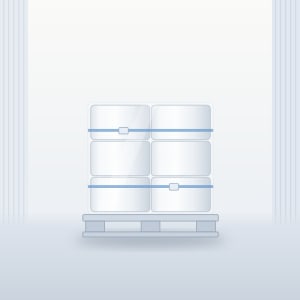
Strapped, shrink-wrapped pallets loaded to FCL.
Any bagged format shipped as a full container load.
Options on any format
Inner liner in woven bags where moisture pickup during transit or storage is a risk.
Printed private-label bags from a 10-container programme; from the first container, plain white bags with your own pallet labels.
Language, net weight declaration, lot marking and barcode set to your import requirements.
Strapped and shrink-wrapped, with pallet dimensions and stacking agreed before the first run.
Container loading
A 20′ container carries roughly 23–27 tonnes palletized. Big bags and loose bulk load to the same weight limit with different handling at your end — bulk needs a tipper or a grab, big bags need a forklift with an extended mast or a crane hook.
Exact pallet count and net weight per container are confirmed in the offer, since they follow the bag size and pallet pattern you specify.
Not sure which format fits your intake?
Tell us how the salt is unloaded and stored at your end — we will recommend the packing and price it in the offer.